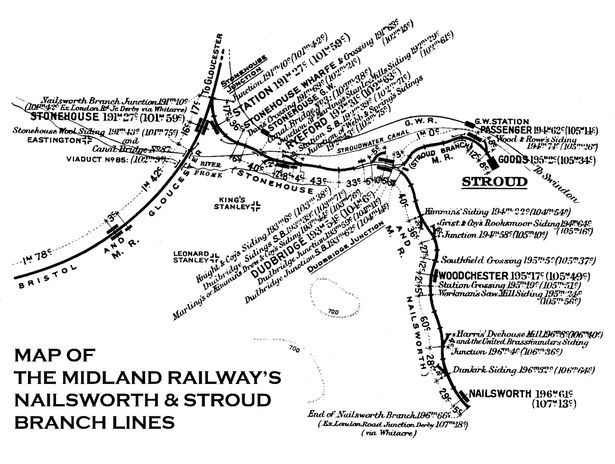
The following information has been obtained via an online search of railway employment records for the Midland Railway. The Stonehouse and Nailsworth Railway opened in 1867 as an independent company but was taken over by the Midland Railway the following year. It was a branch line in Gloucestershire which left the Gloucester-Bristol mainline at Stonehouse and ran 5.75 miles to its terminus at Nailsworth. A spur to Stroud was added 20 years later.
The Station Masters at Nailsworth up to the First World War are listed below with their years in that position in brackets.
Robert Jelly (?opening – 1873).
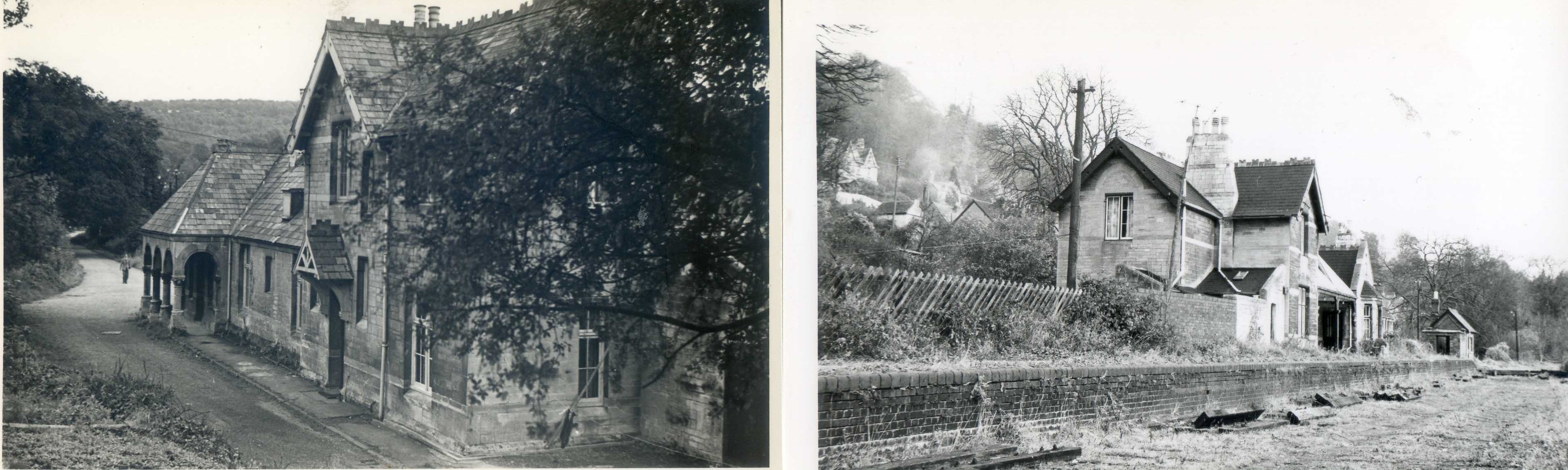
Robert is the earliest to hold the position of Station Master at Nailsworth that I can identify. He was born in Leicester around 1841 and was married to Maltilda Rhoda Hopkins at Edgbaston, Birmingham, on 17th April 1864. On 31st May 1864 he was appointed a “Signal Porter” at Lifford Station on the Birmingham and Gloucester Railway on the south side of the city. In July 1866 he is documented as the Station Master at Frocester. By 1871 his is on the Midland Railway records and the census as Station Master at Nailsworth but I am not able to establish his date of appointment there. If he took up the position on the opening of the line he would have been about 27. His pay was £75 per year. His stay was relatively short as around August 1873 he moved to take up the same position at Berkeley Road Station – perhaps considered a step up as it was on the main line between Gloucester and Bristol. His stay there was also brief as by April 1875 he was Station Master at Mangotsfield a position he held until resigning on 31st March 1901, aged 60. That was the very date of the 1901 census on which he is entered as “retired Station Master”. He career moves are reflected in the places of birth of his children. Rhoda was born at Kings Norton (near Lifford), Annie at Frocester, Emma and Harry at Nailsworth and Kate at Mangotsfield. Emma was 11 on the 1881 census so Robert must have been at Nailsworth in 1870. On the 1911 census he is living on Fishponds Rd, Bristol. It must have been quite a thing moving into the brand new building at Nailsworth which served both as a home and station.
J Dolphin (1873-75)
Prior to his appointment at Nailsworth he is recorded as a Goods Clerk at Bromsgrove. His entry as Station Master at Nailsworth is dated 19/8/1873. His pay was the same as his predecessor; £75 per year. In March 1879 he is Station Master at Dursley. The Midland Railway records then state that he died at Bromsgrove on 19/2/1880.
T H Pendry (1875-88)
The 1871 census records him as aged 25, born at Bedminster, and working as a Clerk for the Midland Railway, probably at Gloucester as he was living in the Wotton St Mary parish not far from the station (Eastgate). On the 1881 census he is the Station Master at Nailsworth and his three youngest children Anne (5), Flora (3) and Ellen (1) were all born at Nailsworth. His wife Frances, of approximately the same age, was born at Huntley. Like his two predecessors he started on an annual salary of £75 but this was increased to £85 on 18/7/1876, to £95 on 4/5/1880 and finally to £110 on 31/10/1882; a 47% increase in 7 years which was generous when one considers that 5 of those years had seen a little deflation in the general economy. The Midland Railway records indicate that he died in post on 5/10/1888.
Charles Stephen Hyde (1888-1908)
Charles was appointed one month after the death of his predecessor on the same pay of £110 per year, which rose to £120 on 1/8/1898. He was born around 1845 at Rodborough. His father was a Woollen Cloth Worker and he initially followed that trade, being described as such, aged 16, on the 1861 census. He married Elizabeth (nee Holder), a dress maker and one year his senior, at Leonard Stanley on 30th September 1866. However by the 1871 census he is working for the Midland Railway at Ilkley in Yorkshire. He was appointed Station Master at Nailsworth on 15/11/1888 a position he held until retirement in 1908.
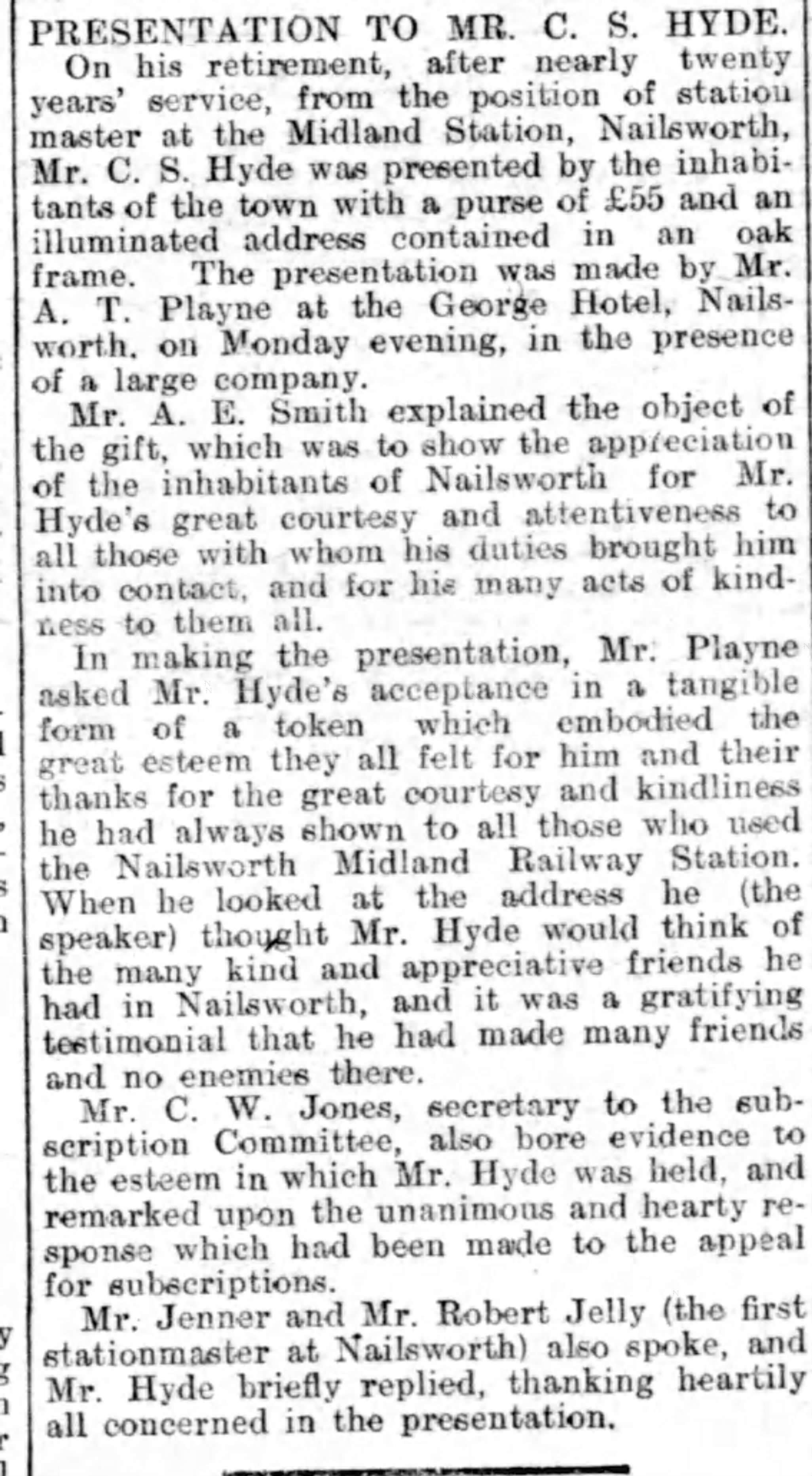
The 1911 census has him retired and was living in Watledge, overlooking his former place of work, and was still there on the 1921 census. He was the Station Master when Nailsworth saw its only crash. On the dark night of the 19th January 1892 a train overran the buffers. His contribution to the Accident Report reads as follows.
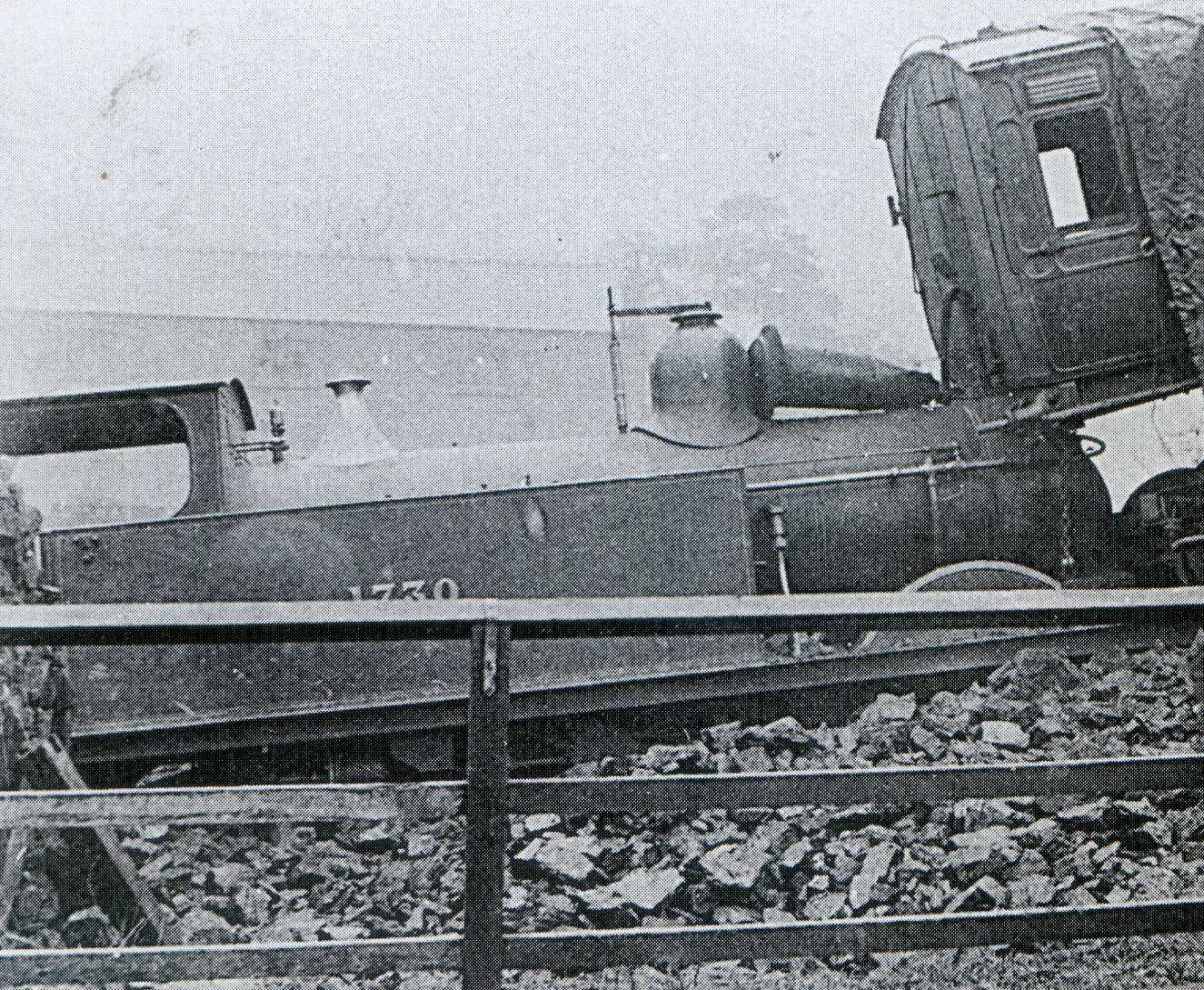
Charles Stephen Hyde, in service 24 years, a Station Master 22 ½ years, and at Nailsworth three years, said: “On January 19th I came on duty at 7.30 a.m. to remain until the closing of the station at 9 p.m. I left duty the previous day about 9.30 p.m. At 8.15 p.m., on January 19th, I was in my greenhouse near the Dudbridge end of the station when I thought I heard a train approaching, and directly afterwards I heard a train go past the platform at a speed, I should think, 15 miles an hour. From the position in which I stood I could not see anything of the effect of the brake. I at once followed the train to the end of the rails, and found that the engine and one carriage had passed over the stop. All passengers except four had alighted. Two men were in about the centre compartment of the rear carriage, and left without assistance. I found two ladies in the leading compartment of the rear carriage. The leading seat of this compartment had been forced towards the opposite seat, and I found that one lady had one of her legs broken, and the other lady was somewhat bruised. I sent for medical assistance, and under direction of the doctors, I removed the ladies from the carriage, and the one who had the broken leg was removed to Stroud Infirmary. The night was dark but clear. I saw the driver and fireman some short time afterwards in the porters’ room, and they appeared to be quite sober. There are five lamps on the platform supplied with gas, all of which were lighted at the time. The train is due at 8.22 p.m. There has been no alteration in the signalling arrangements since I have been at Nailsworth, three years. I have never heard any complaint from a driver as to any difficulty in knowing his position when approaching Nailsworth. There were some passengers in the leading carriage, but they were all out when I got to it. I have time off duty for meals. The driver attributed the accident to the greasy state of the rails.” [That was not found to be the cause – rather the crew had lost their bearings and shut off steam and applied the brakes too late on approaching Nailsworth.]
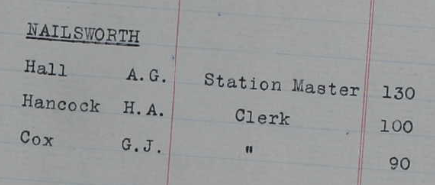
Alfred George Hall (1908-1914+)
Alfred took over from Charles Hyde in 1908.
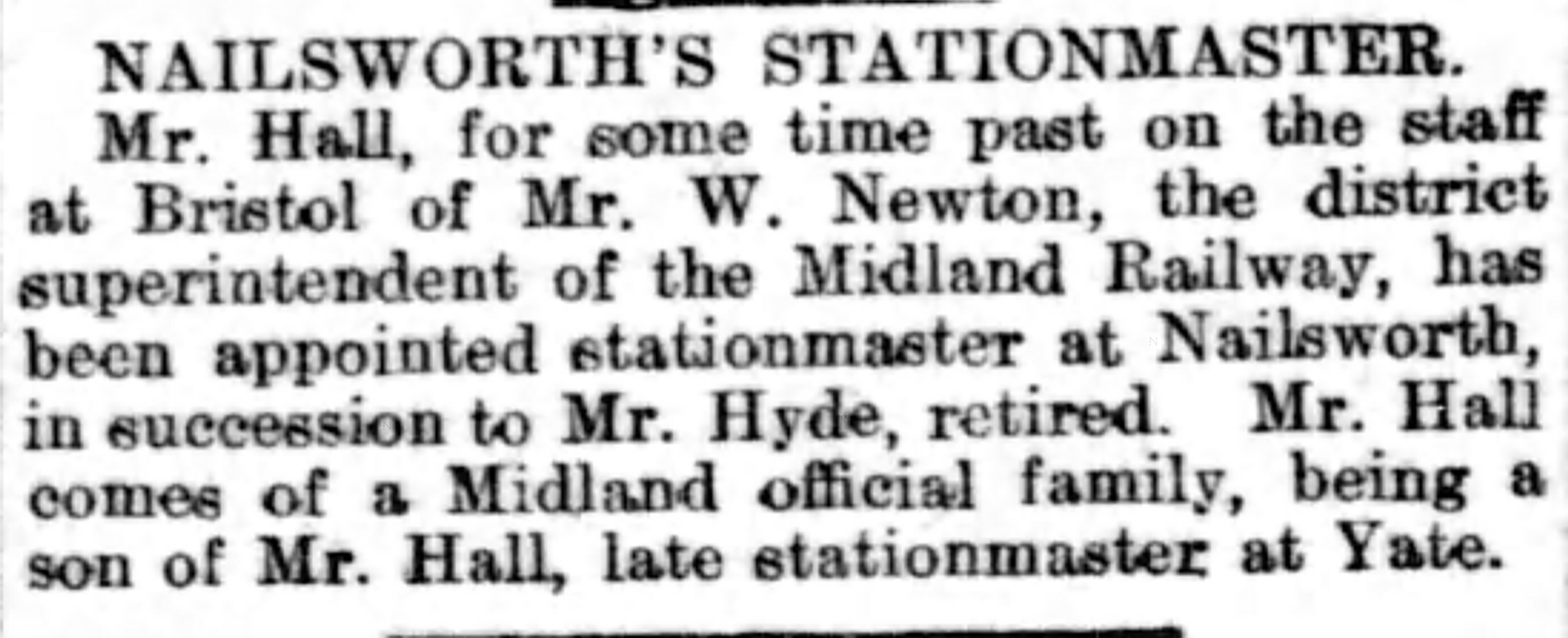
He is stated as being the Nailsworth Station Master on the 1911 census. Born in Bath he was the son of the Station Master at Yate and in 1884 was serving at that station as a “Machine Boy” aged 14. In 1901 he was a Goods Clerk at Oakham in Rutland but there after may have spent some time in Hereford as two of his children were born there. His starting annual salary at Nailsworth was £120 but this had risen to £130 by 1914. He remained Station Master at Nailsworth on the 1921 census but by the 1939 Register had retired to Paignton in Devon.
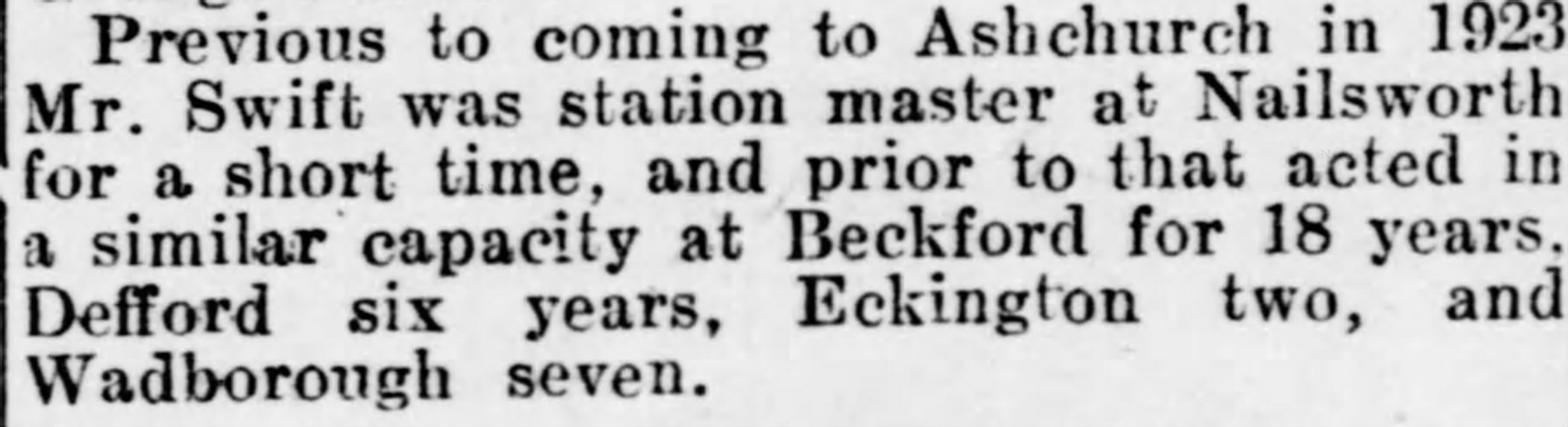
I have only scanty information on the Station Masters at Nailsworth after Alfred Hall. A Mr A Swift is mentioned as being bfiefly in the post in the early 1920s; see the mention of him below from the Cheltenham Chronicle and Gloucestershire Graphic of 29th September, 1928.
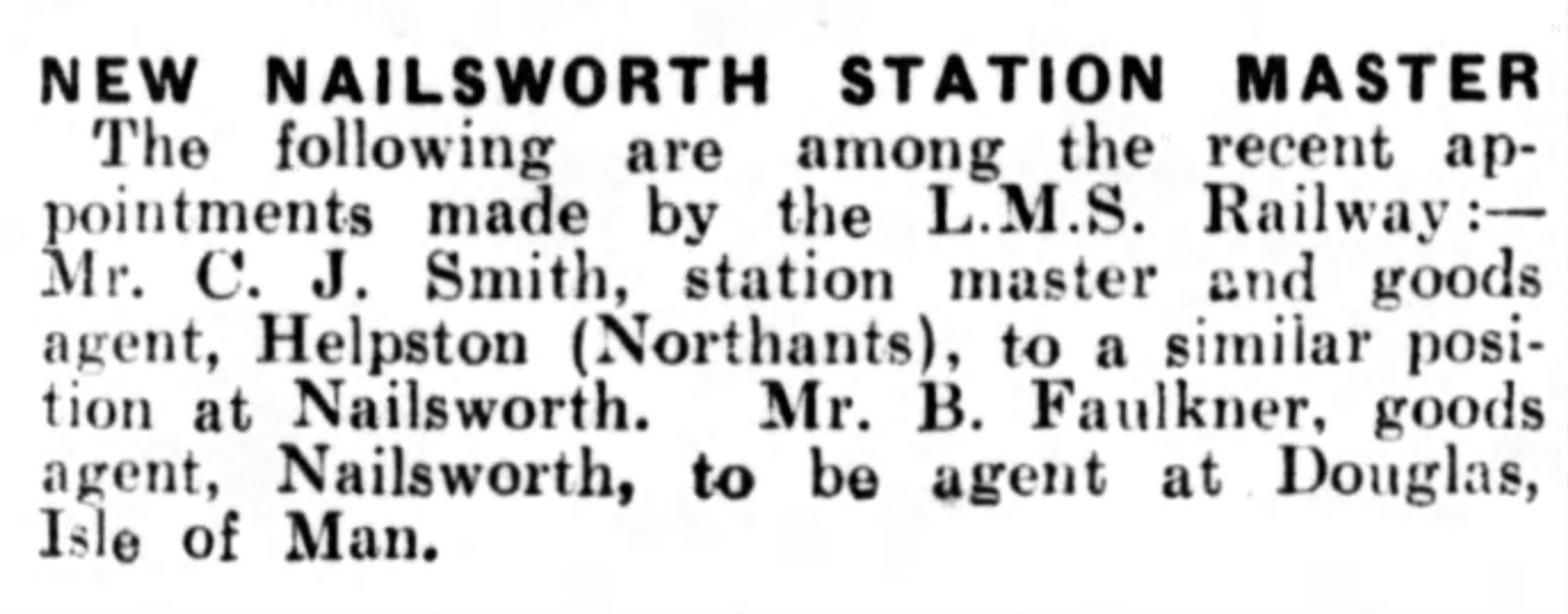
Benjamin Faulkner moved to Nailsworth around 1930, from a similar position at Woodchester. The Electoral Register has him living at the Station House at Woodchester in 1928 then at the Station House in Nailsworth in 1932 (I don’t have records for the intervening years). He then moved to the Isle of Man in 1936 being replaced at Nailsworth by C. J. Smith. At this time the roles of Station Master and Goods Agent at Nailsworth appear to have been combined.
 oldrailwaystuff