The railway to Nailsworth branched off the Gloucester to Bristol mainline at Stonehouse. Initially running east towards Stroud it then turned south into the steep sided valley towards it destination a little over 5 miles from the mainline. Woodchester was the penultimate tiny quiet station about half way along the floor of the valley.
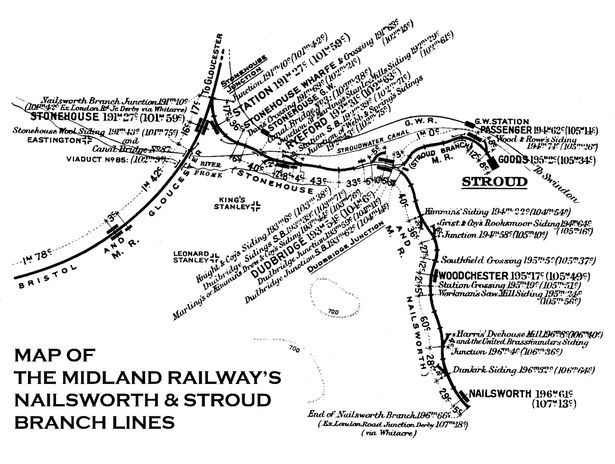
The line opened as an independent company in 1867 but a year later was taken over by the Midland Railway. Having lost passenger services in 1947 it finally closed as part of the Beeching cuts in 1966. Like most small branch lines it had a few mishaps. The most spectacular was when on a dark January night in 1892 the engine of a passenger train overran the buffers at Nailsworth fracturing the leg of one of the few passengers on board. Other incidents were more minor – though there were two fatalities within a month in the summer of 1901; the death of a Mill Girl on the crossing at Lanes Siding, Dudbridge on the 20th July, then an ultimately fatal accident at Southfield Crossing near Woodchester station on the 14th August. This event is recorded in the Midland Railway records, though incorrectly documented as having occurred on the 14th September.
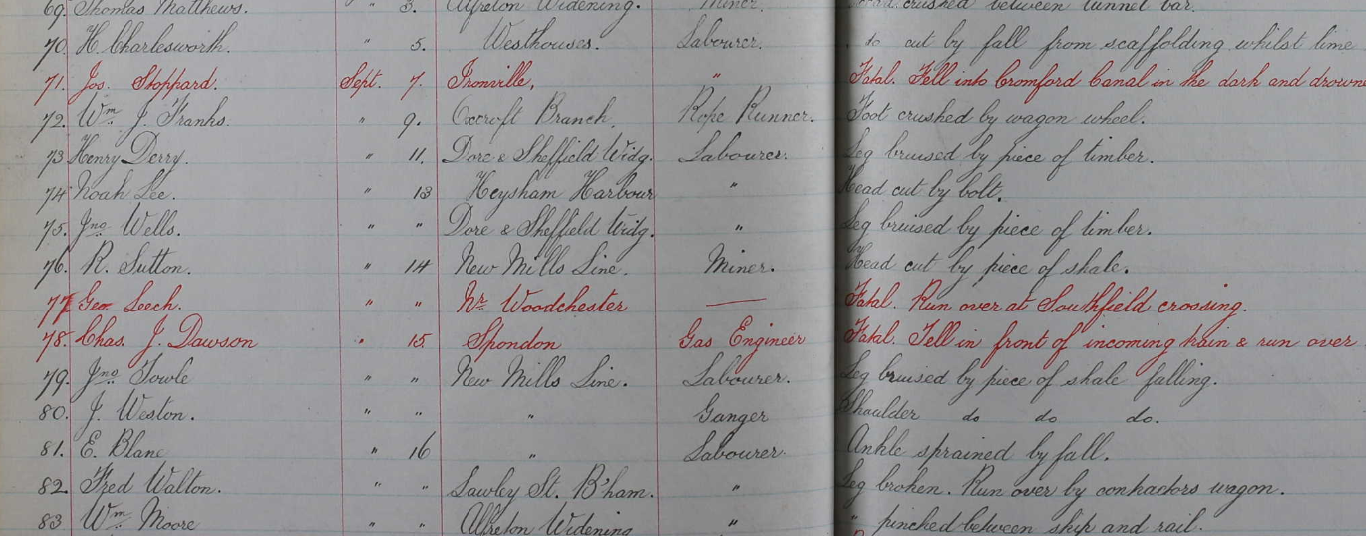
The victim was 57 year old George Leech, who today would be considered a “Vulnerable Adult”. He was struck by the engine of a passenger train travelling at about 20 mph towards Nailsworth. He suffered a serious head injury. He didn’t die at the scene but never regained consciousness and passed away in Stroud Hospital about a week later. I find his story poignant and touching.
The location was about 300 yards to the north of Woodchester Station at a minor crossing, principally for pedestrians, adjacent to the main valley floor road, today’s A46, which ran parallel to the railway. It seems he had walked down to the railway, unaccompanied, from his home several hundred feet higher up on the shoulder of the hill at Amberley where he’d been born and grown up.
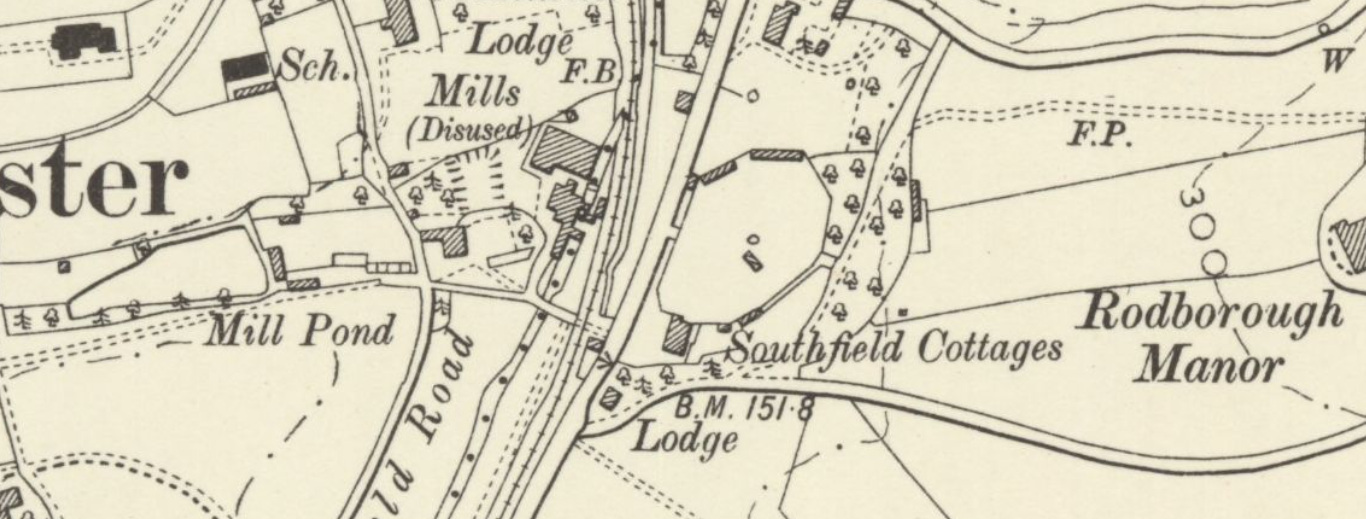
In the 1860’s George would have seen the railway being constructed in the valley below his home. It would not have passed unnoticed as a significant problem in its construction was a major landslip of the whole valley side from Amberley, where he lived, down to the valley floor. In pre-history an avalanche like slip of Fuller’s Earth had occurred at this location. When excavations for the railway in the valley floor disturbed the footing of this mass of clay it reactivated the slip taking 4 houses with it – and subsequently bankrupted the contractor.
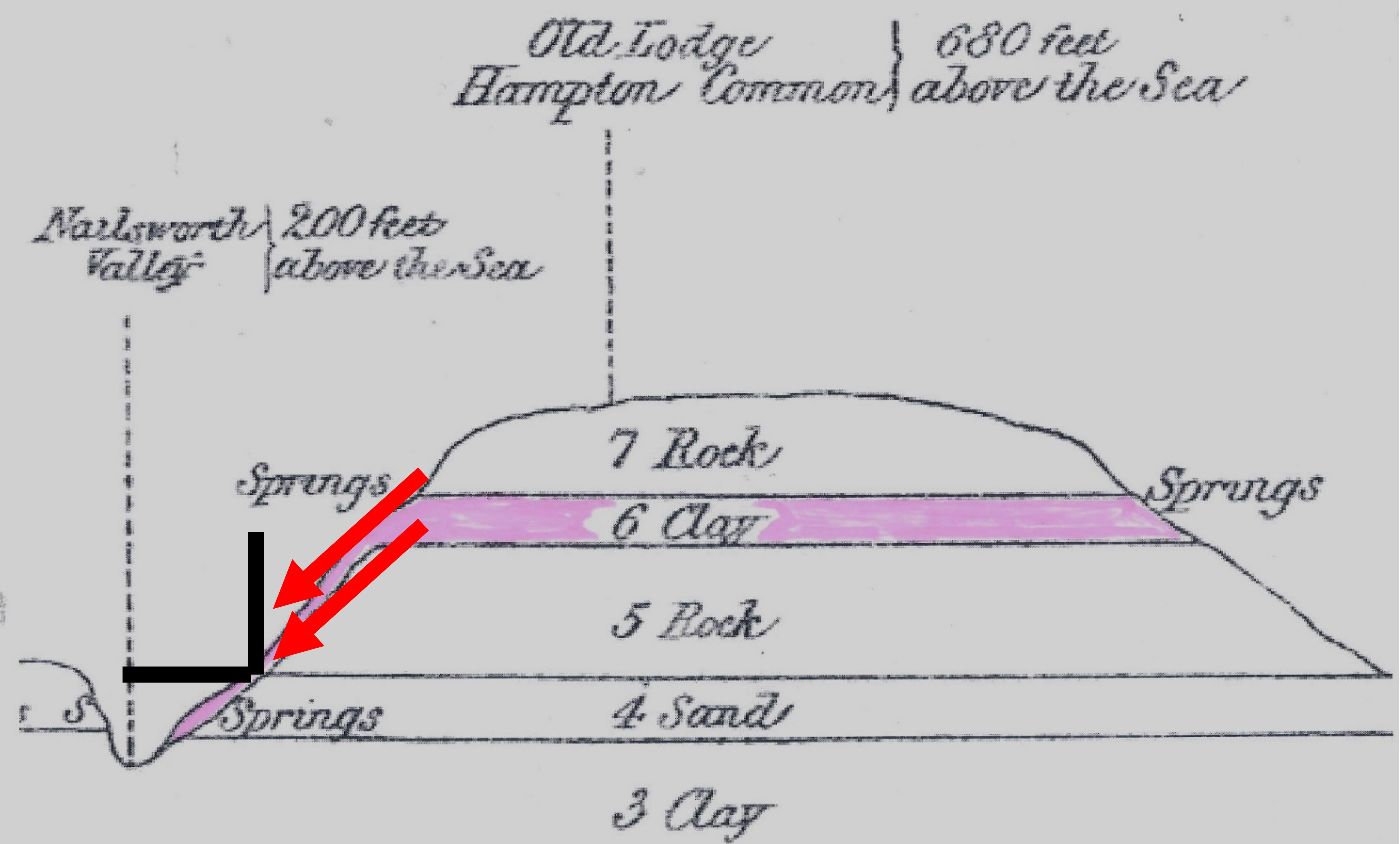
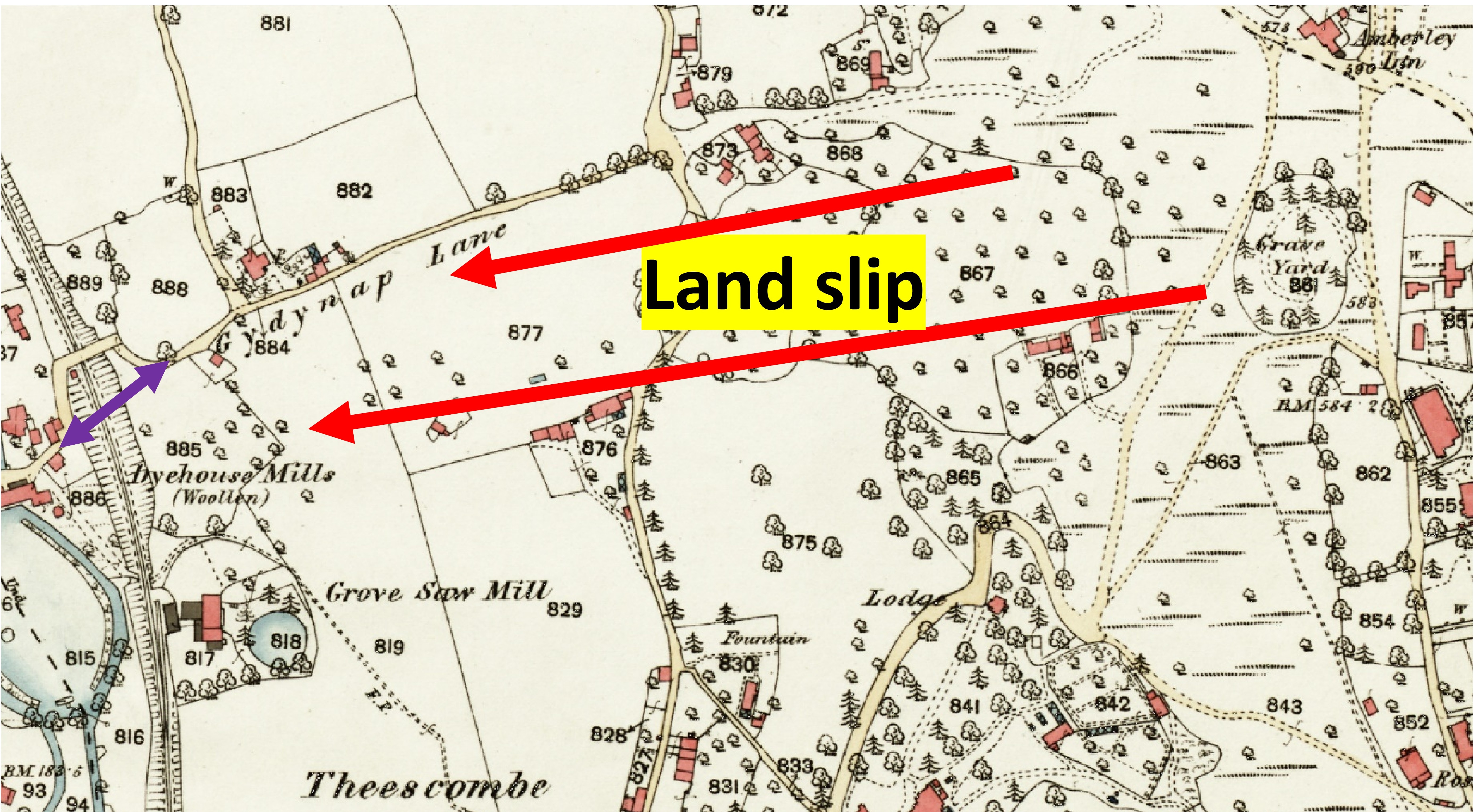
[The above 2 illustrations are courtesy of Brian Middleditch of Nailsworth Historical Society]
In subsequent years he would have frequently seen the steam hauled trains passing gently to and from along the valley; at no great speed. Perhaps he became too used to them, insufficiently aware of their danger.
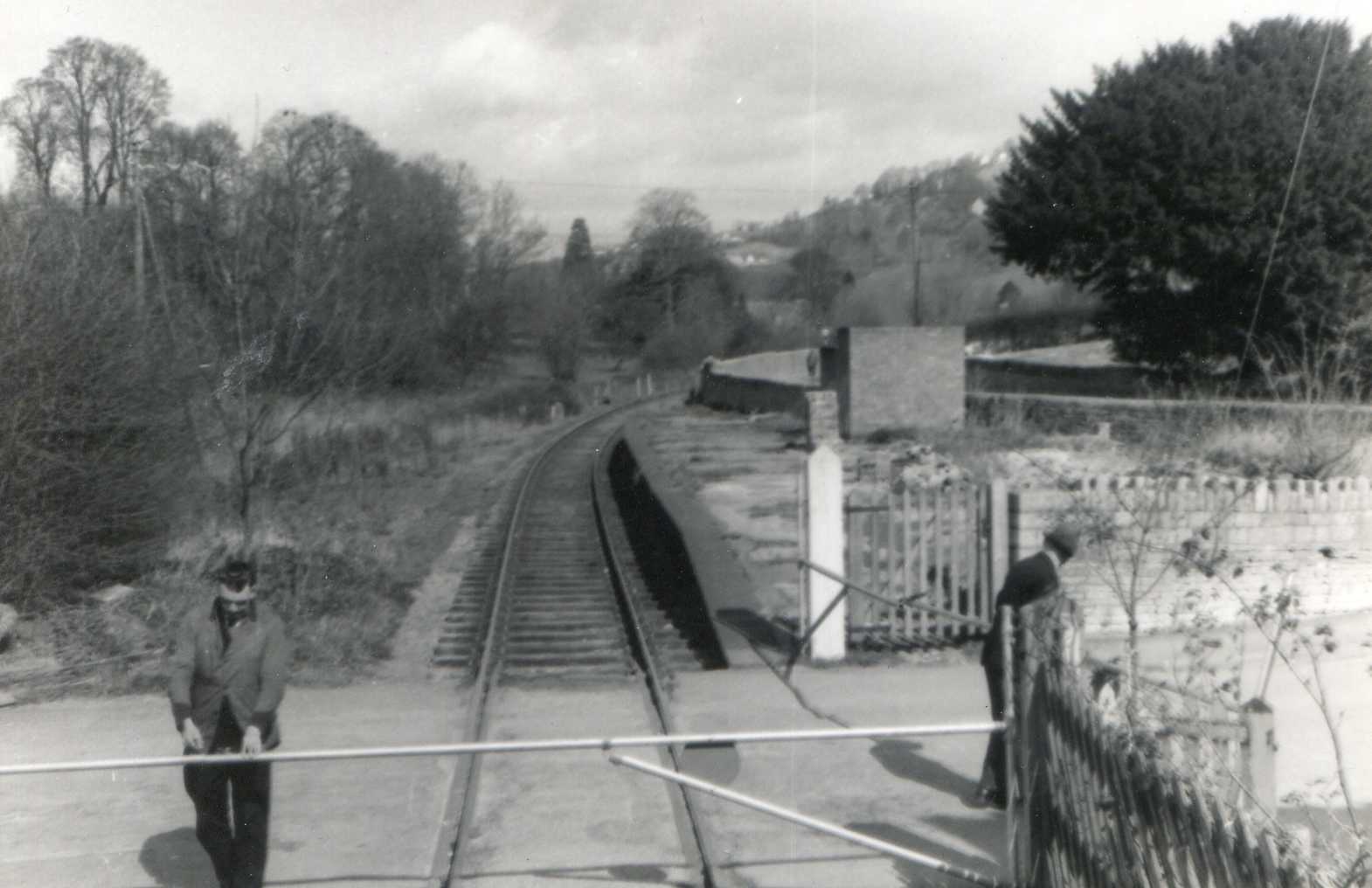
The location of the accident was about 300 yards along the line
in the direction of this view.
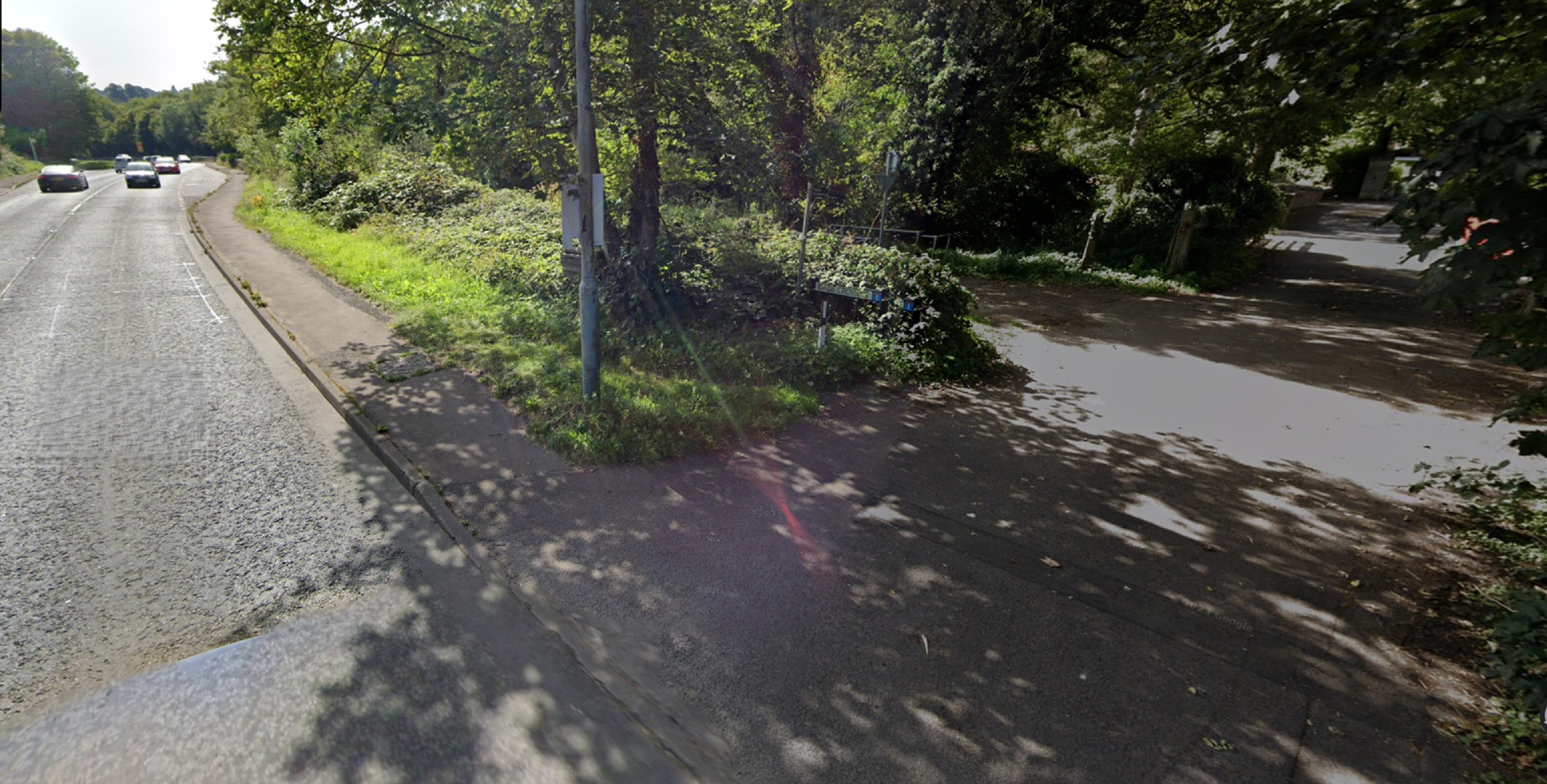
The site of the accident as seen in 2025 (taken from Google maps). The former railway line is now a walkers and cyclists track running, as the railway did, parallel to the A46 road.
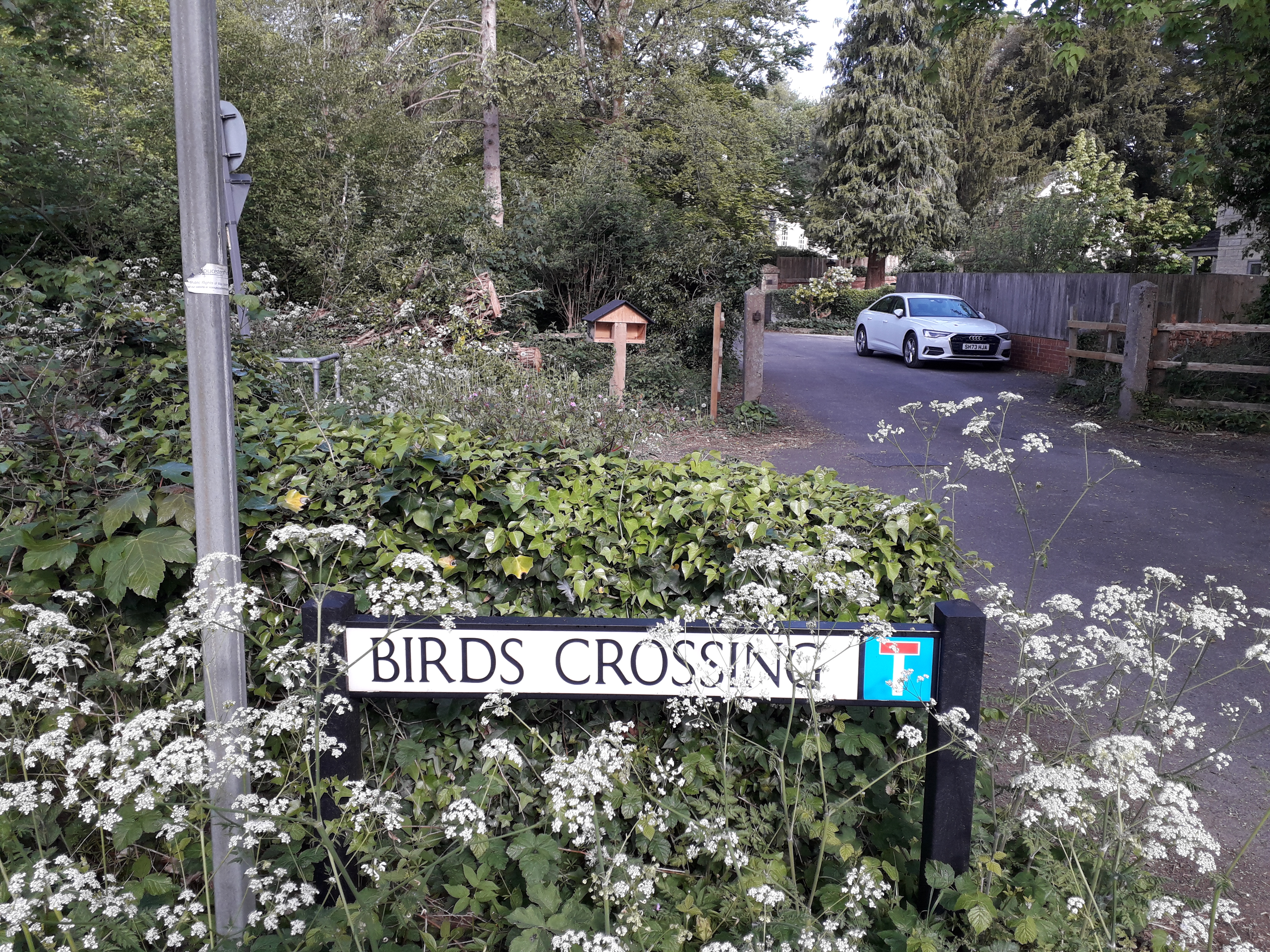
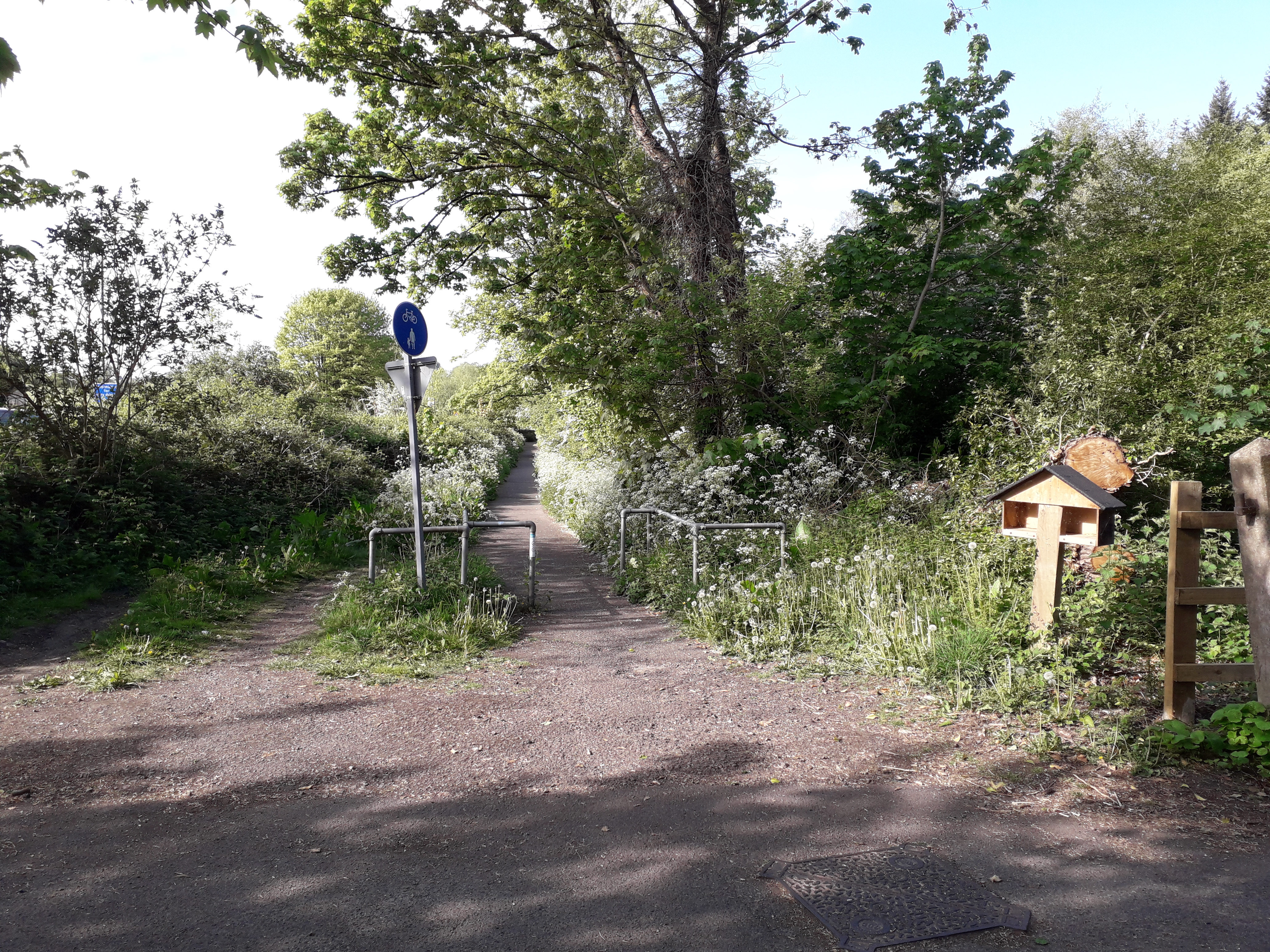
In 1901 the location was known as Southfield Crossing. It is now Birds Crossing. The image on the right looks towards Nailsworth – the direction of view of the driver of the train.
George Leech’s life [the surname spelling is Leech in all but the newspaper article below, where Leach is used] can be traced through the censuses from 1851 to 1901. The latter was taken just 2 weeks before his death. He was baptised at Amberley Parish Church on 21st May 1844. His father Samuel was 42 at the time of his birth, and a “General Labourer” on the 1851 census. George’s mother Mary, 6 years younger than her husband, was a widow by the 1861 census and survived into her 80’s. She was head of the family as a “Laundress” but the household income may have been supplement by George’s older brother by 5 years, Henry, who was a “Wool Cloth Worker”. The area was a stronghold of the wool weaving industry but with periods of harsh economic depression. George’s older sister by 2 years, Ann, and his younger sister by 4 years, Atholindo, seem never to have married and remained at the family home with George throughout his life, and beyond their mother’s death in the 1890’s. Both gave evidence at the Coroner’s Inquest into his death.
George was handicapped from an early age and was never able to work or, it seems, live independently. He never married. The 1871 and 1881 censuses describe him as “Imbecile from birth”. Today “imbecile” is not an acceptable term but at this time it was the official and recommended description for “Persons in whose case there exists from birth or from an early age mental defectiveness not amounting to idiocy, yet so pronounced that they are incapable of managing themselves or their affairs, or, in the case of children, of being taught.” The family however did not consider his condition to have existed from birth but to have been cause by typhoid fever when very young.
We can never know whether George’s issues were truly congenital or acquired through an infant infection, but what seems certain is that he was profoundly deaf – so likely did not hear the train’s warning whistle, and lame – and so was unable to quickly move out of the way.
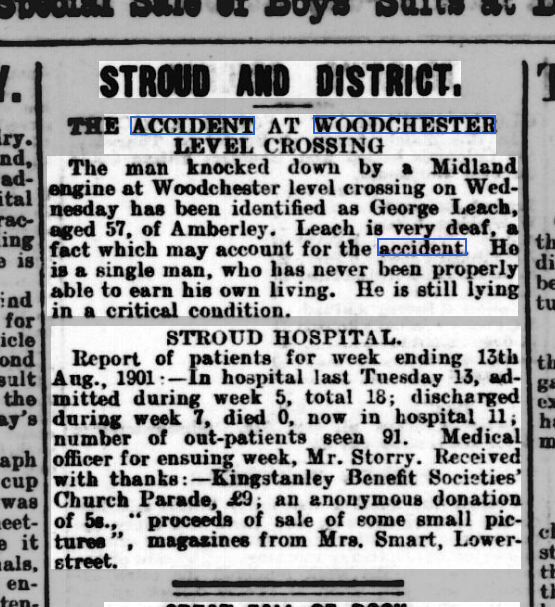
The Coroner’s Inquest and Verdict were reported in the local press and the following extract from the Gloucestershire Echo of August 24th, 1901, provides some of the details of the incident.
Railway Fatality at Woodchester. Inquest and Verdict.
Mr R. H. Smith (Deputy Coroner) held an inquest at the Stroud General Hospital on Friday afternoon, touching the death of George Leach, 57, of Amberley, who died the previous evening of injuries caused by being knocked down by a passenger train on the Midland Railway line at Southfields crossing Woodchester, on the 14th inst. – Mr J. Robinson, District Traffic Inspector, was present on behalf of the Midland Railway. Joseph Wood M.R. fireman, residing at Gloucester, said he was engaged on an engine running between Stonehouse, Stroud, and Nailsworth Junction stations. On the 14th inst. he was with a passenger train going from Dudbridge to Nailsworth, and about 4.15 p.m. they neared Woodchester crossing. The whistle was blown as usual about 150 yards from the crossing. Soon after witness noticed deceased on the crossing and the driver immediately blew his whistle, but deceased walked across on to the four-feet way and stood looking on the ground. Witness thought the deceased neither saw nor heard the train, although the driver whistled in all three times. They were about 20 yards away when deceased walked on the line. After they had pulled up, witness got off the engine, went back with the guard, and found the man lying on his face with his head towards the road and his feet near the metals. He was badly cut and injured, and was unconscious. He was conveyed to the Stroud Station and thence to Stroud Hospital. The man was probably lame, or he might have escaped. They were going about 20 miles an hour. Edward Venn, driver, of Gloucester, gave corroborative evidence, and added that it was not possible, after he had seen the man, to pull up before the train reached deceased at the crossing. Rose Selina Payne, wife of a M.R. drayman, said she looked after the crossing and saw the train pulling up, and went out to see what was gone wrong, as she thought there was something unusual. She saw the deceased lying on the ground as stated by the first witness. There was a large wound on the head, and there was no doubt but that the deceased was knocked down by the engine. Atholindo Leach of Amberley, sister of deceased, said deceased lived with witness and her sister, and on the 14th inst. deceased, who had no occupation, went for a walk. A severe attack of typhoid fever when he was quite an infant had left him very deaf, affected his nerves and brains, and also his speech. His right foot was deformed, and his knee was very weak. He was very deaf, and witness was of the opinion that deceased would not have heard or seen the train. She was perfectly satisfied that it was a pure accident, and that no blame was attributed to anyone. William Morgan James, house surgeon at the Hospital, said deceased never recovered consciousness after being admitted and died from shock. A verdict of “Accidental Death” was returned, the Coroner adding that he was very pleased with the manner in which the officials of the Midland Railway Co. had assisted in the bringing forward of the evidence, and felt sure that everything was done as well and as quickly as possible. Sergt. Parker also said that the station-master rendered him every possible assistance in obtaining evidence etc.
I imagine the effect all this had on the two sisters; the shock of the news of the accident and perhaps regret for letting their vulnerable brother George go out on his own. I imagine they would have visited him in Stroud Hospital and seen him lying there unconscious and bandaged – coming to realise that he was not going to recover. They probably walked there from home, over Rodborough Common then down the steep valley side to Bowbridge then a little way up the hill on the other side to the hospital; beautiful scenery in high summer, but numbed by events. And after George’s death back to the life long family cottage at Amberley – now just the two of them – two aging spinsters – but at least they had each other for support.
My thanks to Ethan Langfield at Gloucestershire Archive for tracking down the above newspaper report, and the note below published on the 15th August, 1901 – the day after the accident..
 oldrailwaystuff